The Hidden Cost of CRM Software: Why Small Businesses Need Simple Solutions
Most CRM software for small businesses comes with hidden costs like setup, training, customization, and low team adoption, making them harder to use than expected. Learn why simple, easy-to-use CRM solutions are more effective for small teams and how they improve lead management, follow-ups, and overall business growth.
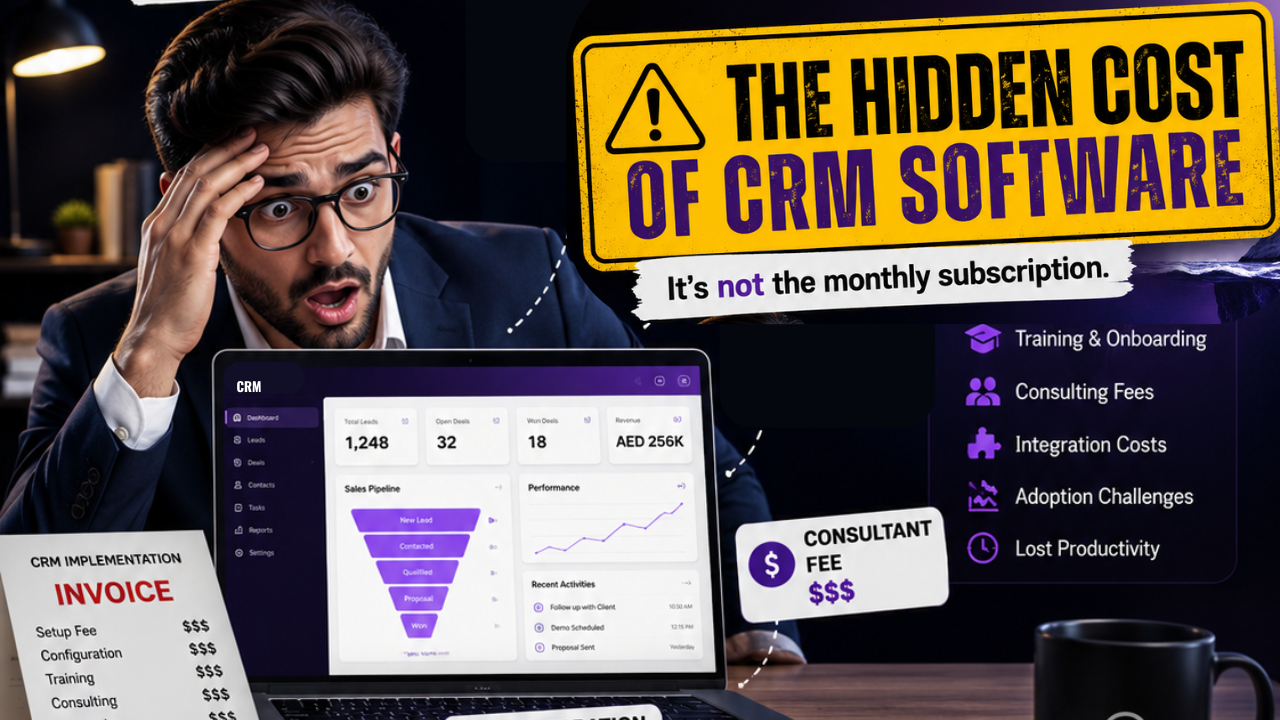
When most businesses decide to invest in a CRM, they expect one thing: growth. They imagine better sales tracking, organized customer data, improved follow-ups, and a more productive team. But what many small businesses discover after purchasing a CRM is something they never planned for—the hidden costs.
The Price You See Is Not Always the Price You Pay
Many CRM platforms advertise attractive monthly plans. What they don't always highlight are the additional costs that come after purchase:
1. Setup and Implementation Costs
Before your team can even start using the CRM, someone needs to configure pipelines, stages, fields, workflows, permissions, and reports.
For many businesses, this means hiring consultants or dedicating internal resources for weeks.
2. Training Costs
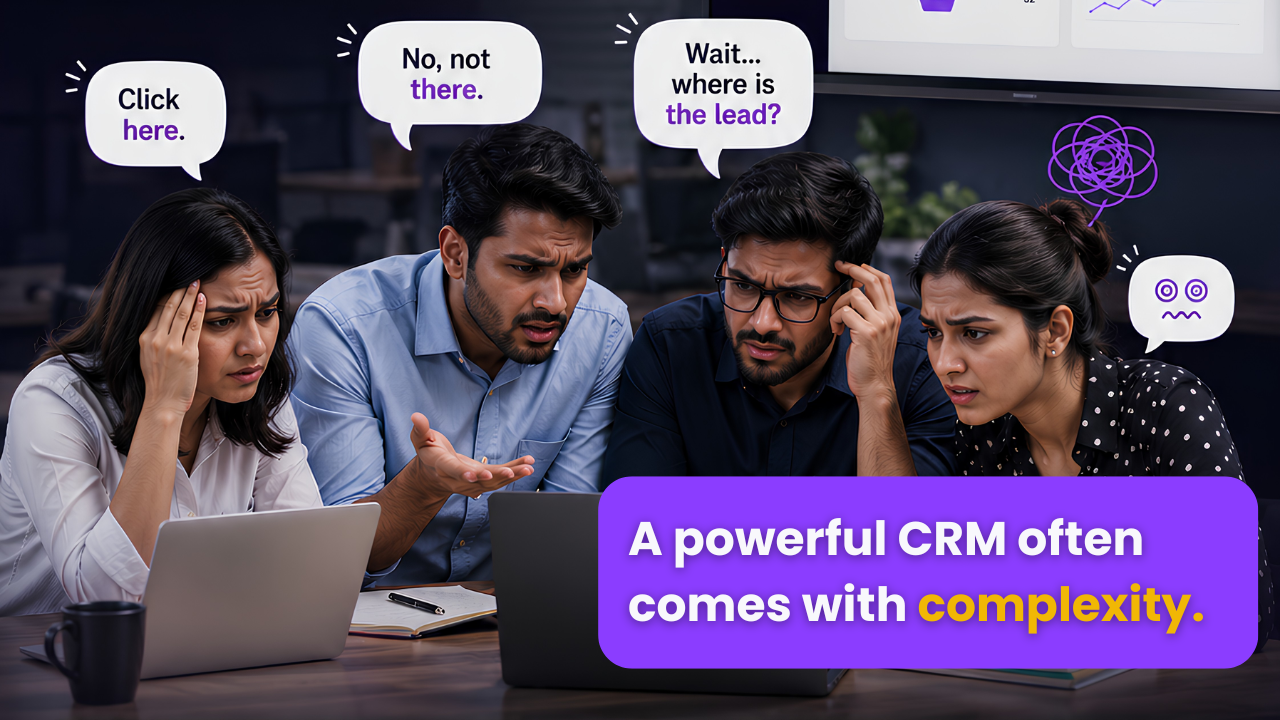
A powerful CRM often comes with complexity.
Your sales team needs training sessions, documentation, onboarding meetings, and continuous support before they feel comfortable using the system.
Every hour spent learning complicated software is an hour not spent selling.
3. Low Team Adoption
This is one of the biggest hidden costs. If a CRM feels difficult, employees avoid using it.
- Leads remain in WhatsApp chats.
- Customer notes stay in notebooks.
- Follow-ups are tracked in Excel sheets.
The company ends up paying for software while continuing old habits.
4. Customization Expenses
Many CRMs are designed for large enterprises.
To fit a small business workflow, companies often need additional customizations, integrations, and support services.
What seemed affordable initially quickly becomes expensive.
The Problem: Small Businesses Are Buying Enterprise Tools
Today's CRM market is filled with solutions designed for large organizations. These tools are excellent for companies with dedicated IT teams, CRM administrators, and extensive sales operations.
But most small businesses don't have those resources. A team of 3–20 people doesn't need hundreds of features.
- They need simplicity.
- They need visibility.
- They need reminders.
- They need a system their team will actually use.
Why Simplicity Wins
The best CRM is not the one with the most features. The best CRM is the one your team uses every day. A simple CRM helps businesses:
✔ Capture leads quickly
✔ Never miss follow-ups
✔ Track sales opportunities
✔ Monitor team performance
✔ Stay organized without extensive training
When adoption is high, results follow naturally.
Small Businesses Need Small-Business Solutions
Technology should reduce complexity, not create it. Before choosing a CRM, ask yourself:
"Do I need more features, or do I need better execution?"
For many small businesses, the answer is clear. A simple, easy-to-use CRM often delivers more value than a complex enterprise platform. Because growth doesn't come from buying bigger software. Growth comes from using the right software consistently.
Looking for a CRM that's simple, practical, and easy for your team to adopt?
Try ETechCRM with a FREE 3-Month Trial and experience a CRM built specifically for growing businesses.
No comments yet.